Words shape what people feel is possible. For many disabled people, church buildings may be open while the language used inside them still sends a painful message: that disability is a joke, a burden, or something to pity. Respectful interaction and language are core to emotional belonging. They tell disabled people, in everyday words, “You are welcome here as you are.”
This page offers guidance to help your community move away from ableist language and harmful jokes, and toward speech that reflects the dignity, agency, and worth of disabled people.
Why Language Matters
Ableist language is language that treats disability as something bad, lesser, scary, or laughable. Sometimes this is obvious, like using slurs. Sometimes it is subtle, like using disability words as insults or metaphors for “wrong,” “broken,” or “undesirable.”
When churches use ableist language, even casually, disabled people may feel:
- Mocked or devalued
- Afraid to ask for support or accommodations
- Unsure if their presence is truly wanted
- Reduced to a diagnosis rather than seen as a whole person
Respectful language does not mean being stiff or formal all the time. It simply means choosing words that do not require someone else to shrink in order for us to speak.
What Is Ableism?
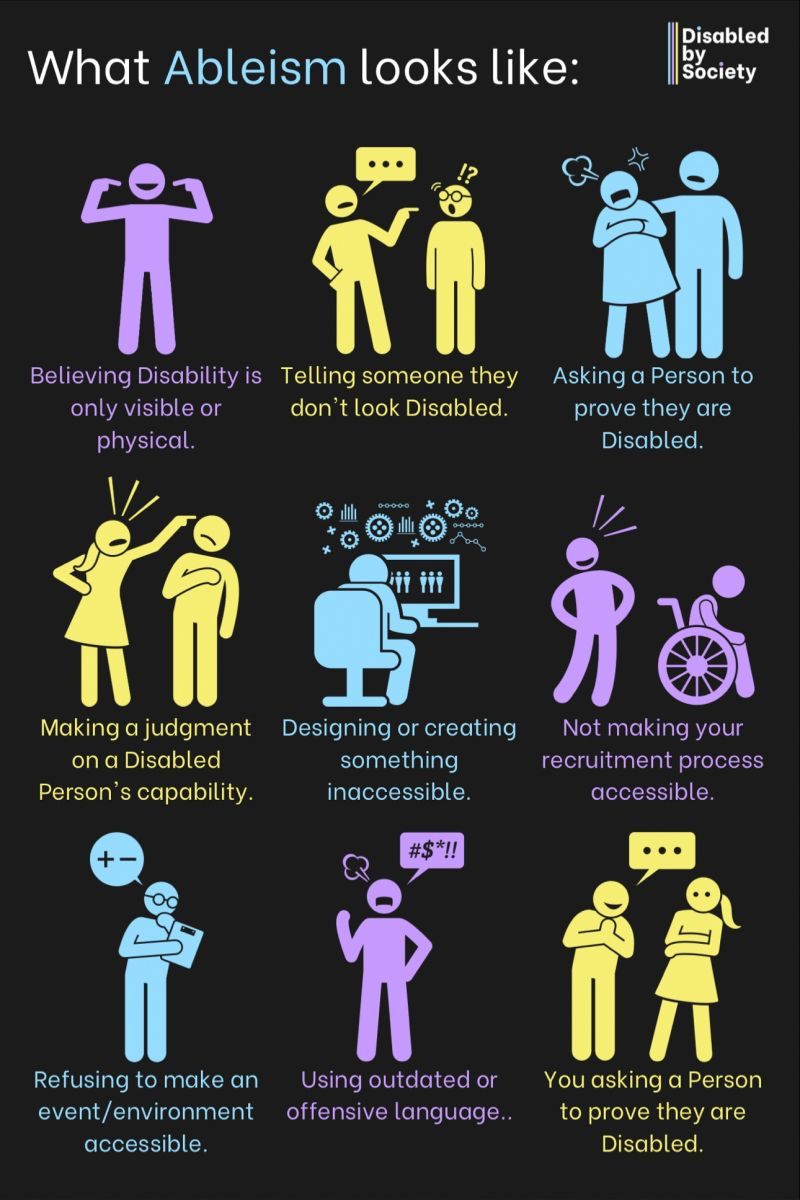
Ableism is the discrimination of and social prejudice against people with disabilities based on the belief that typical abilities are superior. At its heart, ableism is rooted in the assumption that disabled people require ‘fixing’ and defines people by their disability. Like racism and sexism, ableism classifies entire groups of people as ‘less than,’ and includes harmful stereotypes, misconceptions, and generalizations of people with disabilities.
What Ableism can look like in the church:
- Lack of compliance with disability rights laws like the ADA
- Segregating those with disabilities into separate spaces
- Failing to incorporate accessibility into building design plans
- Building an inaccessible website
- The assumption that people with disabilities want or need to be ‘fixed’
- Using disability as a punchline, or mocking people with disabilities
- Refusing to provide reasonable accommodations
Ableist Language
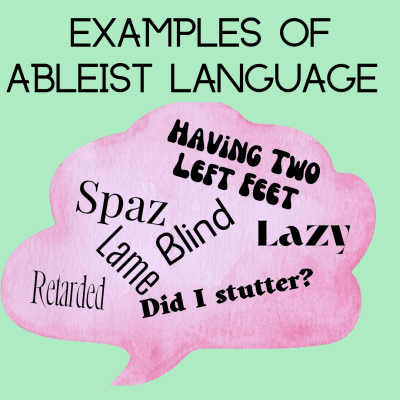
Ableist language includes:
- Slurs about intellectual, developmental, physical, or mental disabilities (including the r-word and similar insults)
- Using disability terms as jokes or throwaway insults, such as calling a bad idea “crazy” or a person “psycho” or “spaz”
- Describing disability as a tragedy, burden, or punishment by default
- Talking about disabled people as if they are objects of pity, charity, or inspiration rather than full participants
Ableist language can be unintentional and still harmful. The goal is not to shame people for what they did not know, but to grow together in using language that reflects the love and justice we preach.
Words And Phrases That Are Not Acceptable
Some words have a long history of being used to degrade disabled people. These words should not be used in church settings at all, including jokes, “teasing,” or quoting someone else. This includes, for example:
- The r-word (often used as an insult for someone or something considered “stupid”)
- Outdated clinical terms like “moron” or “imbecile” used as insults
- Using “cripple” or similar terms as a joke or slur
- Calling people “insane,” “psycho,” “nutcase,” or “schizo” as casual insults
If these words are still commonly used in your community, consider naming them plainly in a teaching or staff training, explaining why they are harmful, and committing together to retire them from church speech.
Everyday Phrases To Rethink
Some phrases may feel ordinary to people who are not disabled but can carry a painful message. Here are examples and alternatives:
| Avoid Saying… | Alternatives |
|---|---|
| “That idea is crazy/insane.” | “That is a wild idea.” “That sounds intense.” “That does not make sense to me.” |
| “I am so OCD about this.” | “I am really particular about this” “I care a lot about the details.” |
| “That was lame.” | “That was unkind.” “That was disappointing.” “That did not work well.” |
| “They are wheelchair bound.” | “They use a wheelchair” “They use a mobility device.” |
| “They suffers from…” | “They have…” “They live with…” “They experience…” |
| “Normal people” versus “disabled people.” | “Non-disabled people” or “People without disabilities” |
You do not have to memorize a list of every possible phrase.
Start by listening for patterns where disability is used as shorthand for “bad,” “broken,” or “less than.”
Talking About Disability Respectfully
Person-first and identity-first language
There is no single correct way to talk about disability. Many people prefer person-first language (for example, “person with a disability”). Others prefer identity-first language (for example, “disabled person,” “Autistic person”). Both can be respectful.
Best practice is simple:
- Do not guess. Ask people how they would like to be described.
- Honor what they tell you, even if it is different from what you learned elsewhere.
- When speaking generally, use language that is common in disability communities, such as “disabled people” or “people with disabilities,” rather than medicalized or pitying terms.
A few general guidelines
- Avoid language that suggests someone is “trapped in” or “confined by” their body.
- Do not define people only by a diagnosis, such as “the autistic” or “the epileptic.”
- Only mention disability or diagnosis when it is relevant and with care.
Respectful Interaction, Not Just Respectful Words
Respectful language and respectful interaction belong together. Some simple practices include:
- Speak directly to the disabled person, not only to a friend, interpreter, or family member.
- Do not touch mobility devices, service animals, or assistive technology without permission.
- Give people time to speak, type, or sign without interrupting or finishing their sentences.
- Do not ask invasive medical or personal questions unless the person has clearly invited that level of sharing.
- Believe people when they tell you what they need or what hurts them, even if it is new to you.
These practices communicate that disabled people are peers and leaders in the life of the church, not projects or problems to solve.
When You Make A Mistake
Everyone learning new language will sometimes get it wrong. The goal is not perfection, but repair and growth.
If someone tells you that a word or phrase you used is ableist or hurtful:
- Listen without arguing.
- Say something simple like, “Thank you for telling me. I am sorry. I will work on changing that.”
- Use a better word next time.
- Do not pressure the person who spoke up to comfort you or explain everything. Do your own learning too.
Churches can model this from the front. When leaders correct their language publicly and briefly, it shows that learning is normal and welcomed.
Real-Life Scenarios
Scenario 1:
Jokes In A Volunteer Meeting
What happened: During a planning meeting, someone says, “We need a straightjacket for that kid,” and the group laughs.
Impact: Members with mental health histories or neurodivergent kids may feel unsafe or mocked.
Better practice: A leader can gently interrupt: “Let’s avoid joking about mental health like that. It can be really painful for some of us. We can find other ways to say things feel chaotic.”
Scenario 2:
The R-word in Youth Group
What happened: A teen calls a game “so r-word” when it does not go their way.
Impact: Youth with intellectual or developmental disabilities, and their siblings, hear that people like them are being used as an insult.
Better practice: A leader can respond: “We do not use that word here. It has been used as a slur against people with disabilities. Let’s try again with different words.” Then follow up one-on-one later with education and care.
Scenario 3:
“Wheelchair Bound” In A Sermon
What happened: In a sermon, the pastor says, “Like the man bound to his wheelchair…”
Impact: Wheelchair users hear their mobility described as bondage, not freedom or access.
Better practice: Use phrases like “a man who uses a wheelchair.” If the pastor realizes this mid-series, they can briefly name and correct it the following week.
Helpful Phrases And Scripts
You can teach and model short phrases that help shift everyday speech:
- “Let’s use language that does not turn disability into a joke.”
- “I am working on not using that word anymore. Can we find another way to say that?”
- “In this church, we avoid slurs, including disability slurs like the r-word. We want our language to reflect the dignity of everyone here.”
- “How would you like me to talk about your disability, if at all?”
Resources For Further Learning
These resources offer deeper guidance on respectful language and disability:
- Disability Language Style Guide (National Center on Disability and Journalism)
Style Guide - List of Terms To Avoid When Writing About Disability – examples of ableist words and phrases and suggestions for better options.
Terms to Avoid - Inclusive Language: Words To Use And Avoid When Writing About Disability (UK Office for Disability Issues) – plain-language guidance.
Inclusive language guide
You can use these resources to shape staff trainings, youth group lessons, and ongoing conversations about language in your congregation.