
Lighting, airflow, temperature, and environmental comfort shape how people experience a space long before worship begins. Many disabled people are affected by glare, inconsistent lighting, strong scents, drafts, or uncomfortable temperatures. These elements may seem small, but they profoundly influence people’s ability to participate, stay present, concentrate, and feel safe.
This page provides guidance for designing lighting and environmental conditions that support physical access, sensory comfort, and an atmosphere of calm and welcome.
Why Lighting & Environmental Comfort Matter
Sensory and physical access are vital to belonging. The way a church manages lighting, temperature, airflow, and scent communicates whether disabled people are expected, welcomed, and accommodated.
Thoughtful lighting and environmental design help support:
- People with low vision who need even, glare-free light
- Neurodivergent individuals who are sensitive to flicker, glare, or harsh lighting
- People with respiratory conditions affected by drafts, scents, or chemicals
- Individuals managing chronic pain or temperature sensitivity
- Older adults and people with balance difficulties
- People with migraines or sensory triggers
- Anyone who benefits from a calm, predictable environment
Comfort is not an “extra.” It is a basic condition for participation, dignity, and safety.
Lighting That Supports Visibility & Comfort
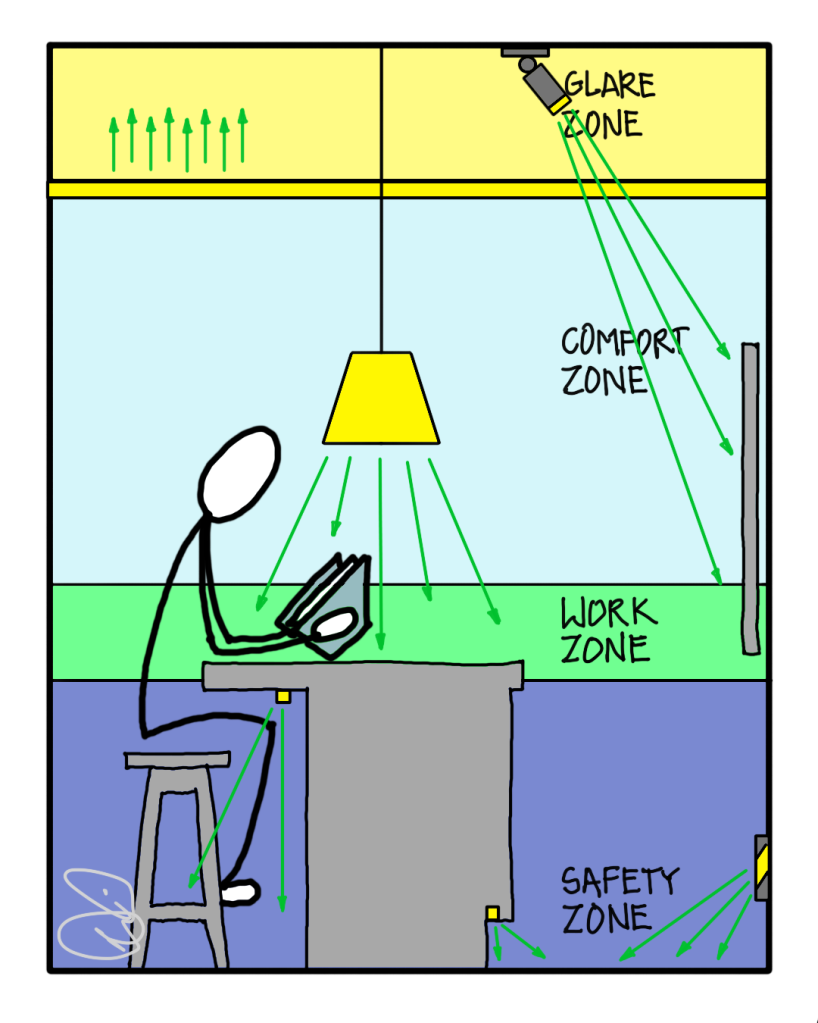
Good lighting reduces fall risks, supports reading and visual focus, and creates a predictable sensory environment.
Best practices:
- Even lighting across rooms, entrances, and hallways without harsh shadows
- Avoid glare: Use matte finishes, lampshades, and diffused lighting instead of bare bulbs
- Consistent brightness between adjacent spaces to prevent sudden shifts
- Warm-temperature LED bulbs to reduce flicker and sensory strain
- Replace burned-out bulbs promptly to maintain consistent visibility
- Use natural light when possible while avoiding harsh direct sunlight on screens or faces
- Maintain clear, well-lit pathways to reduce fall risk
Lighting should feel soft, even, and visually comfortable for a wide range of sensory needs.

Environmental Comfort:
Temperature, Airflow, & Drafts
Temperature, airflow, and drafts are a major factor for people with chronic pain, autonomic disorders, temperature sensitivity, or respiratory needs.
Guidelines for comfortable spaces:
- Avoid direct airflow on seating areas from HVAC vents or fans
- Keep temperatures moderate and consistent throughout the building
- Address hot or cold spots by adjusting vents, using diffusers, or updating insulation
- Check doors and windows for excessive drafts, especially near seating
- Offer blankets or portable heaters in small-group settings for people with chronic cold sensitivity
- Increase airflow during crowded events while maintaining comfort
Comfortable temperature is both a physical and emotional need.
Scent, Smell, & Air Quality
Many congregation members live with asthma, chemical sensitivities, migraines, or sensory sensitivities triggered by strong scents or poor air quality.
Support scent-sensitive access by:
- Avoiding candles, incense, or scented oils unless required for liturgy — and offering alternatives when possible
- Replacing chemical or perfumed air fresheners with low-scent or scent-free options
- Using unscented soaps, cleaning supplies, and sanitizers whenever possible
- Improving ventilation to reduce buildup of cleaning odors or fragrances
- Posting “low-scent environment” guidelines for worship or special events
Reducing scents supports respiratory health, sensory comfort, and inclusion for people with environmental disabilities.

Real-Life Scenarios
Scenario 1: Harsh spotlights cause migraines
Problem: Bright directional lights point directly at the congregation.
Better practice: Use diffused lighting and warm LED bulbs to minimize glare.
Scenario 2: Drafts create pain for someone with chronic illness
Problem: Air vents blow directly onto several seating areas.
Better practice: Redirect vents or adjust airflow away from occupied seating.
Scenario 3: Strong scents make the sanctuary unusable
Problem: Incense, candles, and scented cleaners trigger respiratory symptoms.
Better practice: Switch to low-scent alternatives and improve ventilation.
Quick Checklist:
Lighting & Environmental Comfort
- Lighting is even, glare-free, and consistent across spaces.
- Burned-out bulbs are replaced promptly.
- Temperatures are comfortable and stable.
- Vents do not blow directly on seating areas.
- Floors and mats are secure and non-slip.
- Scents (candles, incense, cleaners) are minimized or replaced with low-scent alternatives.
- Signage is high-contrast, matte, accessible, and mounted at appropriate heights.
- Maps and directional signs support confident navigation.
- Temporary signs do not block walkways or reduce mobility access.

Resources & Further Guidance
- LightAware
Information Sheet - Department of Justice-ADA
ADA Standards for Accessible Design - The Kelsey
Inclusive Design Standards
Lighting and environmental comfort play a profound role in making a church space feel safe, calm, and usable. When these details are treated with the same care as hospitality and worship, they communicate genuine welcome and help people stay, connect, and belong.