
Seating and gathering spaces shape how people feel in worship, fellowship, and community life. When seating is flexible, comfortable, and thoughtfully arranged, disabled people can participate fully without drawing unwanted attention or navigating unnecessary obstacles. Accessible seating is not only about compliance — it creates a sense of dignity, choice, and welcome.
This page provides practical guidance for designing seating and gathering areas that support comfort, mobility, clear sightlines, and a sense of belonging for everyone. The examples included here reflect only a selection of key ADA requirements. For the full set of standards and technical details, please refer to the official ADA Standards for Accessible Design linked throughout this section.
Why Accessible Seating Matters
Where a person can sit determines how they engage with worship, see the front, hear speakers, move freely, and take part in community activities. Poor seating design can silently exclude people, especially those with:
- Mobility disabilities
- Chronic pain or fatigue
- Neurodivergent sensory needs
- Low vision or hearing differences
- Service animals or mobility devices
- Balance or stamina difficulties
Thoughtful seating sends the message: “Your body belongs here, exactly as it is.”
Core Principles for Accessible Seating
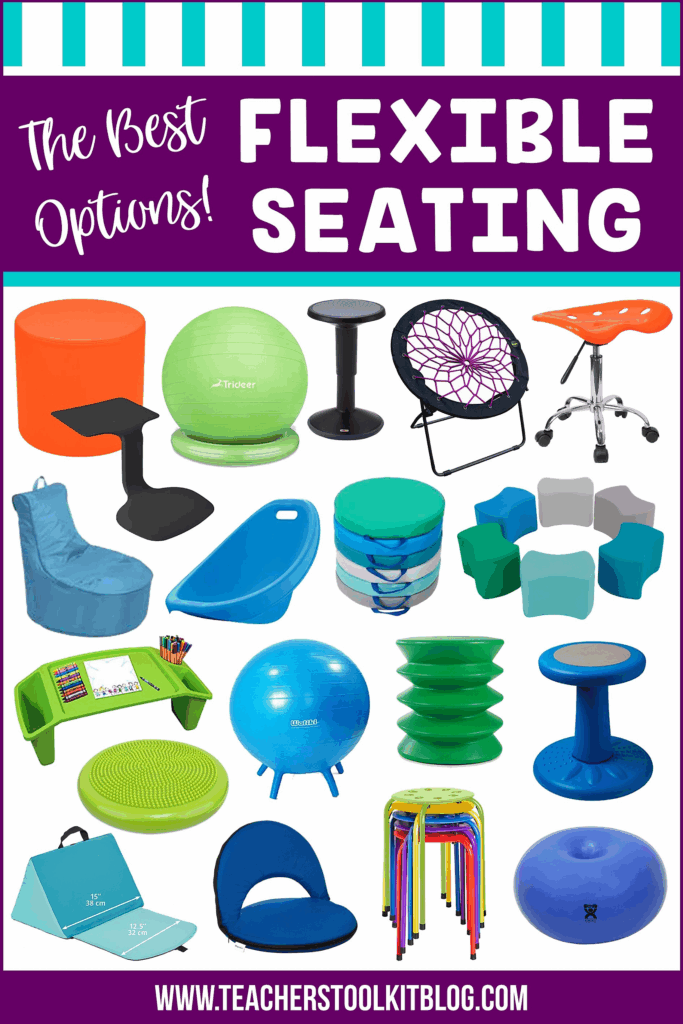
- Variety: Provide multiple seating options — chairs with arms, soft seating, benches, spaces for mobility aids, and room for service animals.
- Flexibility: Allow seating to move, shift, or reconfigure for different needs and events.
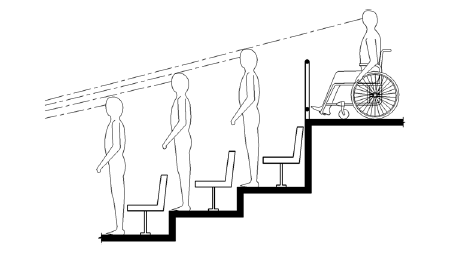
- Distributed access: Accessible seating should be available throughout the space, not only in the back or in isolated areas.
- Comfort: Seating should not cause pain, pressure, or strain.
- Predictability: Seating layouts should be clear, intuitive, and consistent from week to week.
- Visibility and acoustics: Ensure clear sightlines and adequate sound access from multiple seating locations.
Accessible seating is inclusive seating — designed with all bodies in mind.
Locations for Accessible Seating (Not Just the Back!)
One of the most harmful architectural cues churches send is placing wheelchair or mobility seating only in the back row. Accessible seating should be available in several locations around the room so people can choose where they feel most comfortable.
- Front, mid-room, and back options — people using wheelchairs or service animals should have a range of choices.
- Seating for companions should be integrated directly next to accessible seating areas.
- Sightline-friendly locations for people with low vision.
- Sound-friendly seating for people with hearing differences (near speakers or hearing-loop zones).
- Low-distraction zones for people who benefit from quieter spaces.
- Quick exit seating for people who may need to step out due to sensory overload, pain, or fatigue.
Choice is key. People should be able to choose where, how, and with whom they sit.
Seating Design & Furniture Considerations

Provide a variety of seating types
- Chairs with arms for stability during sitting/standing
- Chairs without arms for wider bodies or preference
- Soft seating such as cushioned chairs or benches
- Firm seating for those who cannot use soft surfaces
- Adjustable or movable chairs to create flexible arrangements
- Open floor space for wheelchairs, scooters, or walkers
- Space for service animals to lie safely under or next to a seat
Spacing guidelines
- Ensure pathways between seating rows are wide enough (ideally 36–48 inches).
- Include extra legroom options for people with braces, mobility aids, or chronic pain.
- Leave clear turning space for wheelchairs and scooters.
- Avoid tightly packed rows that limit movement.
- At least one companion seat shall be proviced for each wheelchair space.
| Number of Seats in Assembly Area | Minimum Number of Required Wheelchair Spaces |
|---|---|
| 4 to 25 | 1 |
| 26 to 50 | 2 |
| 51 to 150 | 4 |
| 151 to 300 | 5 |
| 301 to 500 | 6 |
| 501 to 5000 | 6, plus 1 for each 150, or fraction thereof to 5000 |
| 5001 and over | 36, plus 1 for each 200, or fraction thereof, over 5000 |
Seating should support autonomy and comfort for long periods of worship or gatherings.
U.S. Access Board-Assembly Areas
Sensory-Considerate Seating Options
Neurodivergent people, those with PTSD, and people sensitive to sound or movement may prefer special seating locations.
- Low-stimulation zones away from speakers or visual distractions
- Near exits for people who need frequent breaks
- Near walls for grounding and spatial stability
- Areas with minimal foot traffic for sensory comfort
- Varied lighting zones when possible
If your church uses a sensory-friendly or “quiet zone” designation, mark it clearly and explain it in worship materials.
Gathering Spaces
(Fellowship, Coffee Hour, Classrooms)
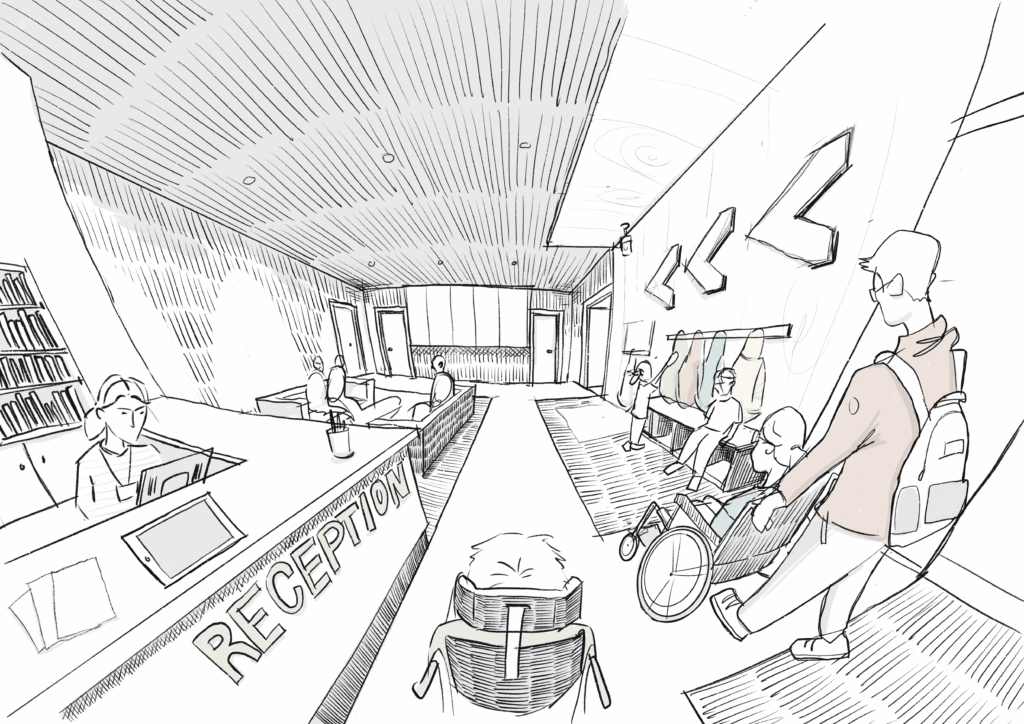
Gathering spaces are just as important as sanctuary seating. They often carry the most social pressure and can be overwhelming if not thoughtfully arranged.
Key considerations:
- Wide pathways: Maintain open routes through tables and seating areas.
- Table variety: Provide high tables, low tables, and wheelchair-accessible tables.
- Clear maneuvering space: Avoid tight clusters of furniture.
- Accessible drink/food tables: Ensure counters and serving areas are reachable (no high-only surfaces).
- Space to pull aside: Create quieter nooks or corners for sensory breaks.
- Seating with backs and arms: Support for fatigue or balance needs.
Social spaces should reduce—not add to—stress and fatigue.
Communication Access Within Seating Areas
Seating must support clear sightlines and communication access for:
- People who rely on lip-reading
- People who use ASL interpreters
- People using captioning devices or screens
- People with visual impairments needing proximity to the front
Plan seating so communication supports (interpreters, caption screens, or visual materials) are easy to see from multiple angles.
Real-Life Scenarios
Scenario 1: Only the back row is accessible
Problem: A wheelchair user is placed at the far back, isolated from community.
Better practice: Provide accessible spaces in multiple rows, including mid-room and front.
Scenario 2: Chairs too low or soft for people with chronic pain
Problem: A person cannot rise from their seat without difficulty or pain.
Better practice: Provide chairs with arms, firm seating options, and varying heights.
Scenario 3: Crowded fellowship hall
Problem: A person using a cane or walker struggles to move between tables.
Better practice: Space tables farther apart, create wider pathways, and offer seating near walls or quieter spots.
Scenario 4: Service animals cannot sit safely
Problem: Narrow rows leave no safe space for a service dog to lie down.
Better practice: Provide service-animal-friendly seating with extra floor room.
Quick Checklist: Seating & Gathering Spaces
- Accessible seating options are available in multiple locations (front, middle, back).
- Companion seating is integrated next to accessible seating.
- A variety of chairs and seating styles are provided.
- Pathways through seating are wide, open, and obstacle-free.
- Seating supports people with mobility, sensory, and stamina needs.
- Service-animal spaces are intentionally included.
- Gathering spaces include accessible tables and wide pathways.
- Sightlines and sound access are adequate for diverse communication needs.
Resources & Further Guidance
- ADA Standards – Assembly Areas
Guidelines for seating, aisles, and companion seating.
2010 ADA Standards - Inclusive Design Toolkit – Spatial Layout
Principles for accessible use of space and pathways.
Inclusive Design Toolkit - Autistic Self Advocacy Network – While focused on events/conferences, this guide highlights universal design, sensory accessibility, and physical accessibility — including seating, circulation, and accommodations for sensory and cognitive needs.
A Guide to Accessible Event Planning
Accessible seating and gathering spaces make it possible for all people to participate fully, comfortably, and joyfully. When these spaces are designed with care and flexibility, they communicate that every body — and every way of being — genuinely belongs.