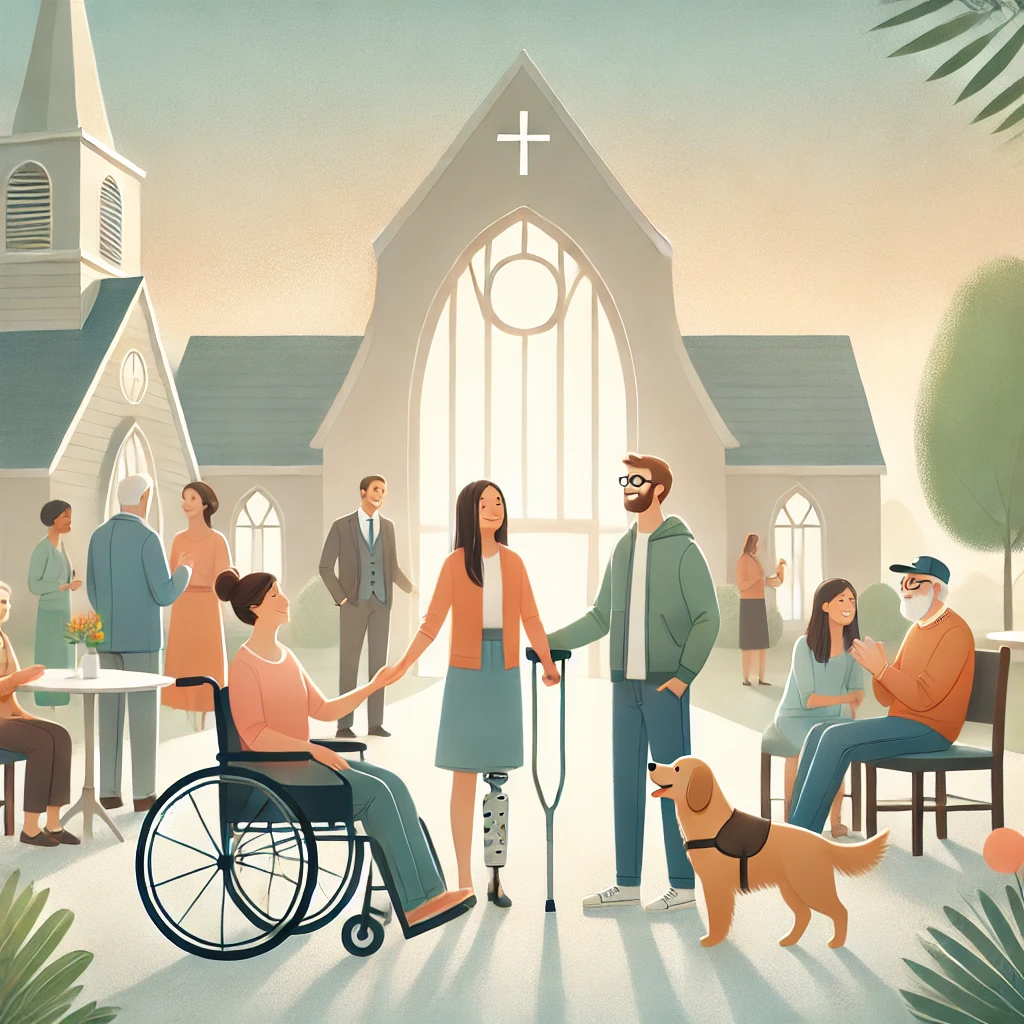
Worship is at the heart of congregational life. For many people, worship is where community, identity, and spiritual meaning come together. When disabled people cannot participate fully — whether because of physical barriers, sensory overwhelm, inaccessible liturgy, or exclusionary patterns — the whole community is diminished. Accessible worship practices honor the truth that every person’s presence and participation enrich the body of Christ.
This page provides guidance for creating worship services that support full, authentic, and joyful participation for people with a wide range of disabilities, communication styles, and ways of engaging spiritually.
Why Accessible Worship Matters
Worship that excludes disabled people, intentionally or unintentionally, fails to reflect the diversity of God’s people. Accessible worship practices:
- Support participation for people with physical, sensory, cognitive, or mental health disabilities
- Reflect the belief that all people bear the image of God
- Strengthen the church’s communal identity and shared ministry
- Remove barriers that prevent engagement, understanding, or comfort
- Honor the gifts and leadership of disabled congregants
Worship becomes more faithful, meaningful, and vibrant when access is built into every part of it.
Physical & Spatial Accessibility in Worship
Worship spaces should support safe movement, comfortable seating, and clear access to participation.
Important features include:
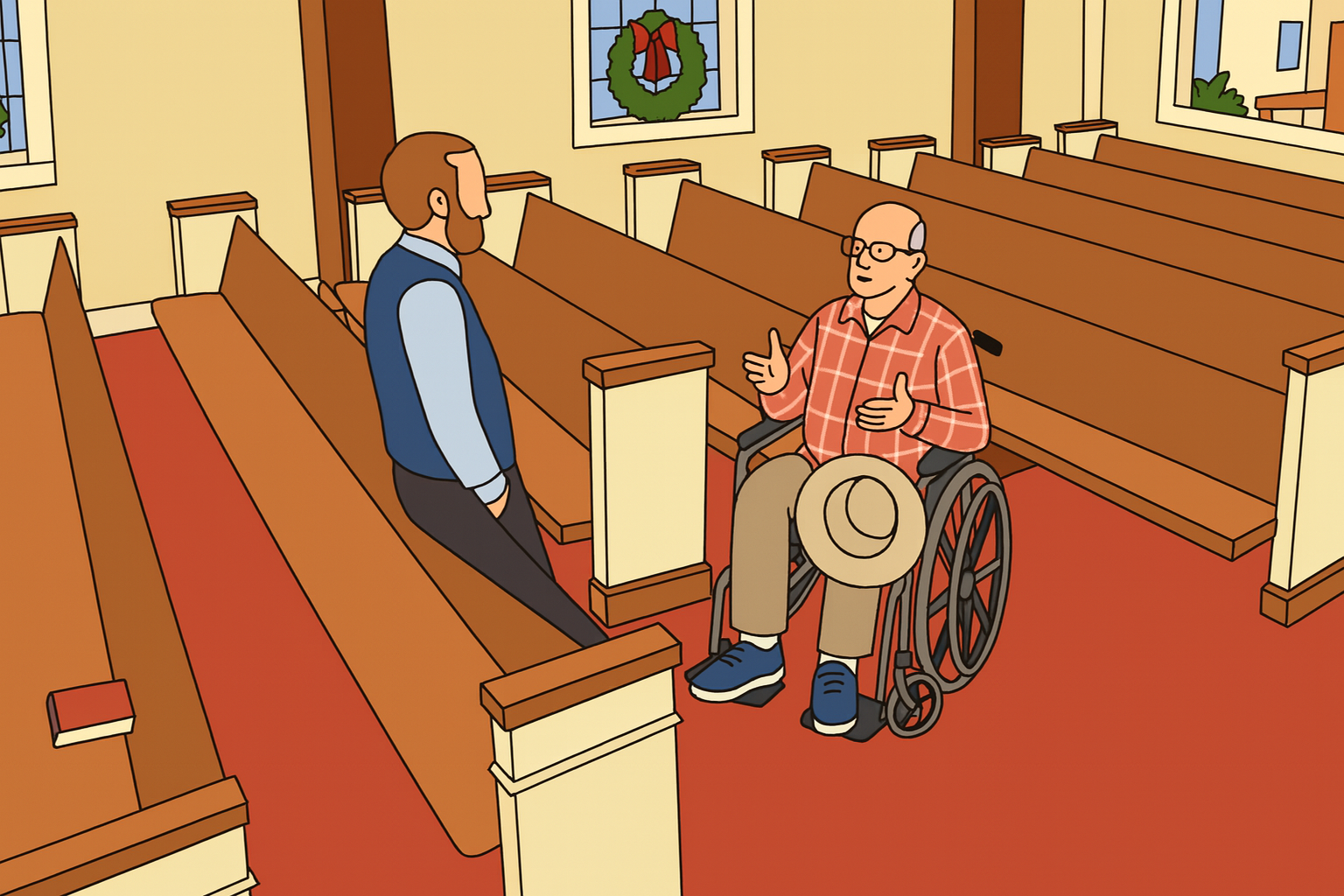
- Accessible seating throughout the sanctuary (not only in the back)
- Clear pathways to aisles, exits, communion stations, and restrooms
- Spaces for service animals to sit safely with their handlers
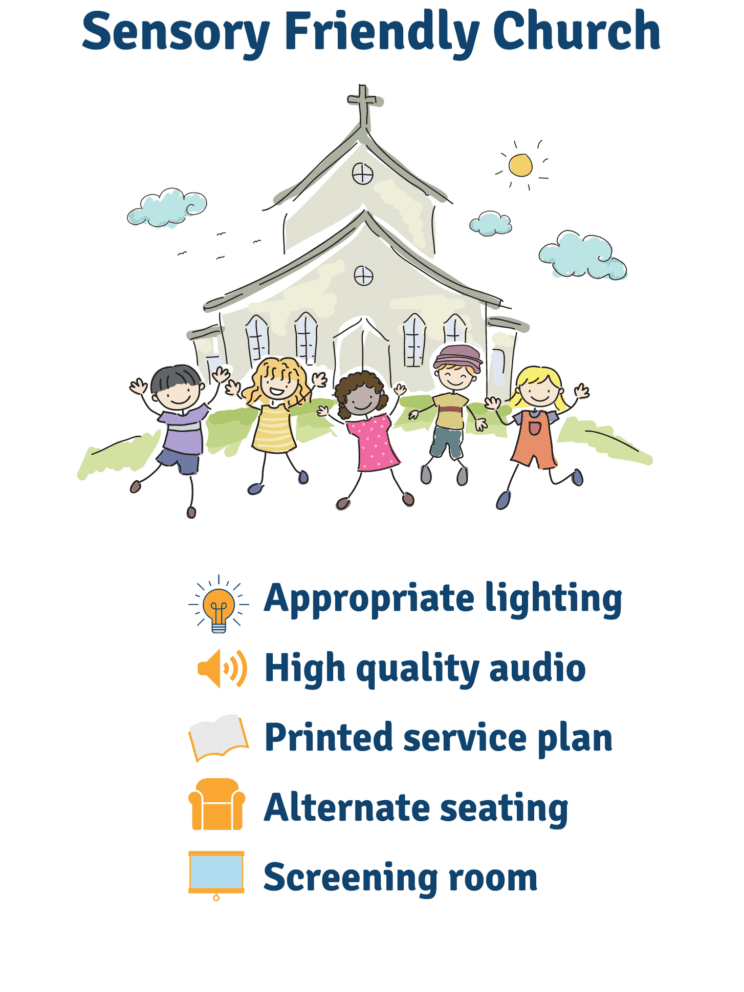
- Adjustable lighting for sensory comfort
- Accessible chancel or platform access for worship leaders who use mobility aids
- Predictable spatial layout with minimal clutter or unexpected obstacles
When the room itself supports participation, worship becomes less stressful and more welcoming.
Liturgical Accessibility
Many worship practices assume certain physical or cognitive abilities. Accessible liturgy expands options so all participants can engage meaningfully.
Support liturgical access by:
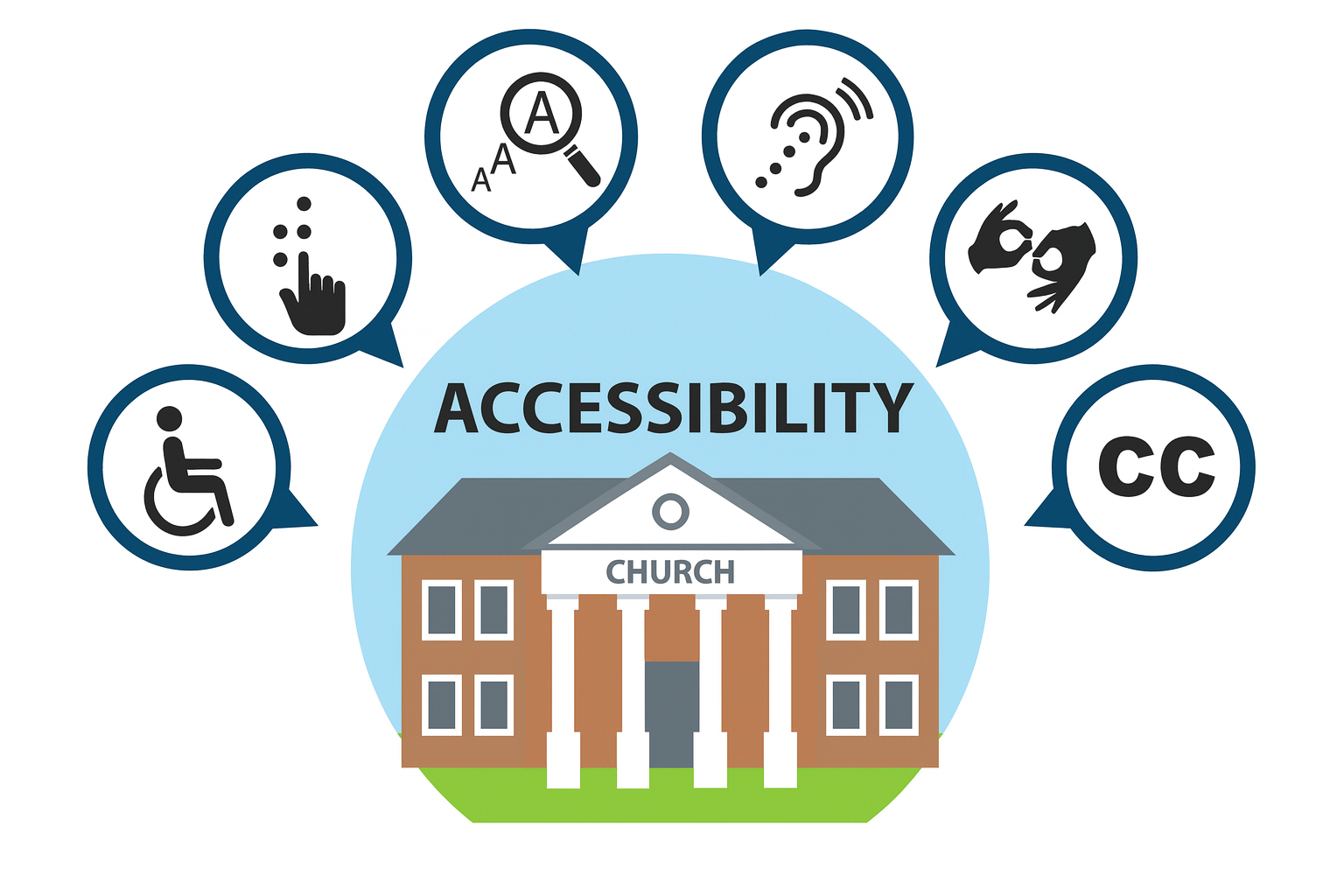
- Offering both printed and digital bulletins in accessible formats
- Using large-print, plain-language, and screen-reader-friendly versions
- Providing screens with captioned text and visual cues
- Offering multiple ways of engaging (standing, sitting, signing, watching, listening)
- Ensuring ASL interpretation is visible for the whole service
- Sharing clear instructions for each part of worship
- Allowing variation in participation (e.g., sit instead of stand, observe instead of speak)
Liturgy becomes most meaningful when it honors real bodies and real needs.
Sensory Accessibility
Worship can be overstimulating for many people, especially those who are neurodivergent or sensitive to sound, light, or crowds.
Create sensory-aware worship by offering:
- A designated quiet or retreat space for sensory breaks
- Volume consistency (avoid sudden loud sounds or microphone spikes)
- Predictable liturgical patterns that reduce anxiety and uncertainty
- Clear visual cues for transitions (e.g., when to stand, sing, move)
- Sensory tools such as ear defenders or fidget items
- Clergy training on neurodivergent-friendly communication
When sensory access is prioritized, more people can worship in peace and presence.
Participation in Rituals & Sacraments
Participation in sacraments — such as communion, baptism, anointing, or confirmation — must be accessible to everyone.
Support sacramental participation by:
- Offering communion in multiple formats (rail, stations, pew distribution, gluten-free bread)
- Bringing the sacrament to seated participants when needed
- Ensuring baptism fonts are reachable or adapted as needed
- Providing alternative wording for vows or responses if speech is difficult
- Using anointing practices that respect comfort, boundaries, and consent
Everyone should be able to participate in the sacramental life of the church without shame or struggle.
Real-Life Scenarios
Scenario 1: Communion line is physically inaccessible
Problem: Narrow aisles prevent wheelchair users from reaching the communion station.
Better practice: Provide multiple distribution methods and keep aisles clear.
Scenario 2: Worship relies solely on verbal participation
Problem: People who communicate nonverbally feel pressured or excluded.
Better practice: Offer written responses, gestures, visual cues, and moments of silent reflection.
Scenario 3: Sudden loud sounds trigger sensory distress
Problem: Microphone pops, loud organ entries, or sudden applause overwhelm some participants.
Better practice: Maintain consistent audio levels and announce upcoming loud elements when possible.
Quick Checklist:
Worship & Participation
- Worship spaces are physically accessible and clear of obstacles.
- Bulletins, screens, and digital resources are accessible to all.
- Sensory needs are respected with predictable patterns and quiet spaces.
- ASL interpretation, captions, and assistive listening devices are available.
- Sacraments are accessible through flexible, multi-format participation.
- Disabled people participate and lead in worship roles.
- Communication is accessible, clear, and inclusive.
Resources & Further Support
- ELCA Disability Ministries – Worship Resources
ELCA Disability Ministry - The United Methodist Church
Ministry, Worship,and Education - Institute on Theology & Disability– Training and research on inclusive worship and participation
Resources - The Irresisible Church Series
Engaging the Whole Church in Accessible Worship
Accessible worship reflects God’s vision of a community where every person can pray, sing, speak, listen, rest, and participate in ways that honor their body and spirit. When worship is accessible, the whole church experiences deeper connection and shared belonging.